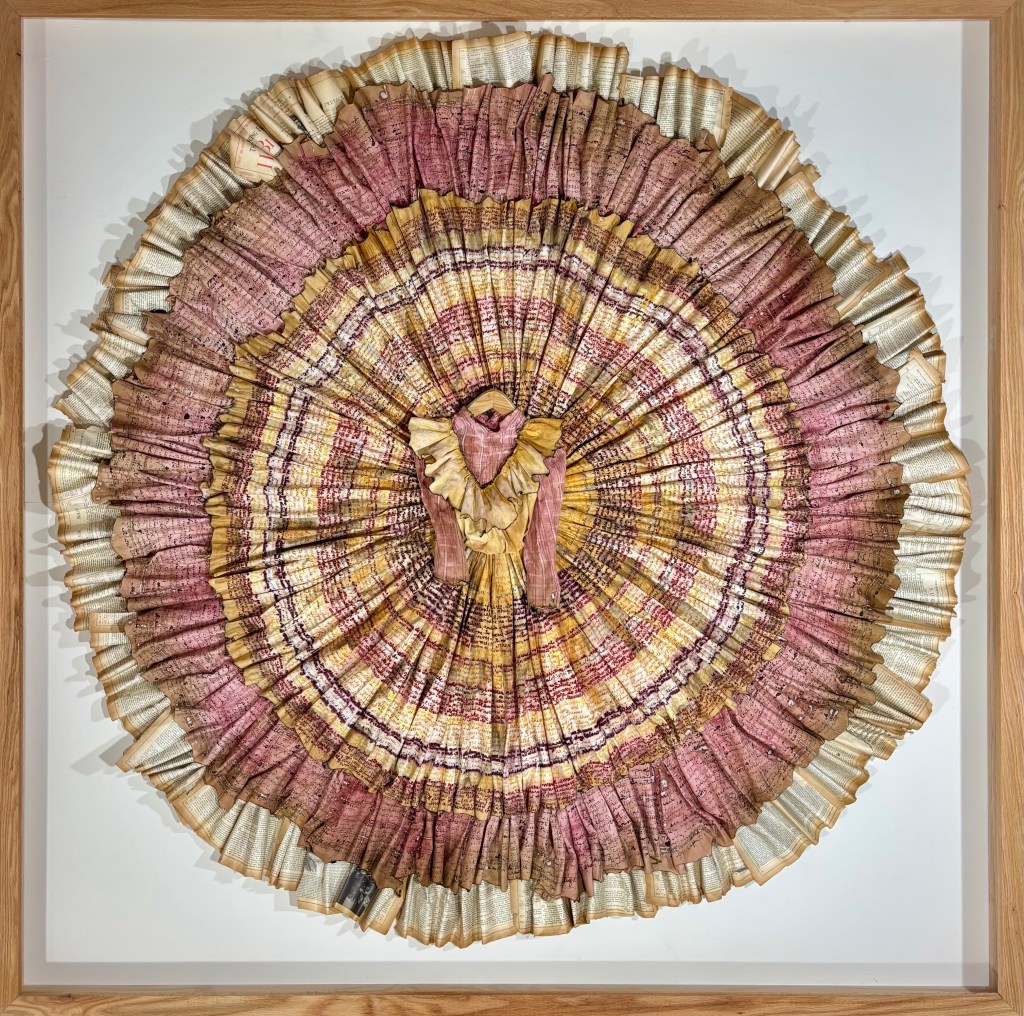
Bazoline (Babeen) Estelle Usher: If You Can Hear The Voice Then You Can LearnMaterials: Red Oak, 1892 Bible, recycled blouse, cotton cloth, henna, chalk, marker, ink, wax, rust, Walnut Grove soil, burnt edges, button, cosmos flowers, wire, plexiglass. The Black Women Oral History Interviews, 1976-1981. Bazoline Usher. OH-31. Schlesinger Library, Radcliffe Institute, Harvard University, Cambridge. Bazoline E. Usher papers, MSS 1239, Kenan Research Center at Atlanta History Center. Special thanks to Clinton Browning, Bazoline’s great-nephew. 74 x 74 x 4.3 in. 2025
Details
Education was at the center of Bazoline “Babeen” Estelle Usher’s life. She was born in Walnut Grove, GA and started school at the age of four. Clinton Browning, her great-grandson, shared a story illustrating her persistence : One morning, as Bazoline was on the way to school, she saw a man hanging from a tree. The adults quietly took him down and prepared him for burial. Despite these hardship, she pressed forward and still went to school. Bazoline was taught that if you didn’t show up, you would lose your seat and couldn’t return and learn. This determination remained a theme throughout her life.
Pushed by a desire to educate their children, her parents eventually made their way to Atlanta, where Bazoline enrolled in high school at Atlanta University under the tutelage of W.E.B. DuBois. She lived through the 1906 Atlanta Race Massacre and witnessed extreme discrimination because of Jim Crow laws. Later in life, she said that there wasn’t anything that she could do about the discrimination and unequal treatment in Atlanta. Though she felt unable to transform policy, she remained unsinged by the fires of bigotry around her and took advantage of every opportunity to increase her education. When such opportunities were not readily available, she said, “If you can hear (the teacher’s) voice, you can learn”. Bazoline always kept her ears open to education. In every setting, she excelled. She was salutatorian of her class, the first principal of an all-black faculty and student middle school, and the first African American to have an office at City Hall in Atlanta, where she served as Director and Supervisor of Negro Schools. She started the first black Girl Scout troop in Atlanta, she was an athlete, and a founding member of the Uplifters Club at the Friendship Baptist Church, the olderst Baptist church in Atlanta, where she also served as the Sunday School Supervisor. She was associated with W.E.B. DuBois, the Alonzo Herndon Family, Mernard Jackson, and many other influential people of Atlanta. She witnesses 106 years of Atlanta’s history.
Bazoline was small in stature. She never married, but cared for many, including her mother and her adopted niece. Throughout her life, she witnessed and was part of the changes that took place in Atlanta’s school system, growing to provide education for all. Her steady patterns of learning and filling her life with service radiated, like a mighty oak, creating a lasting impact on society.
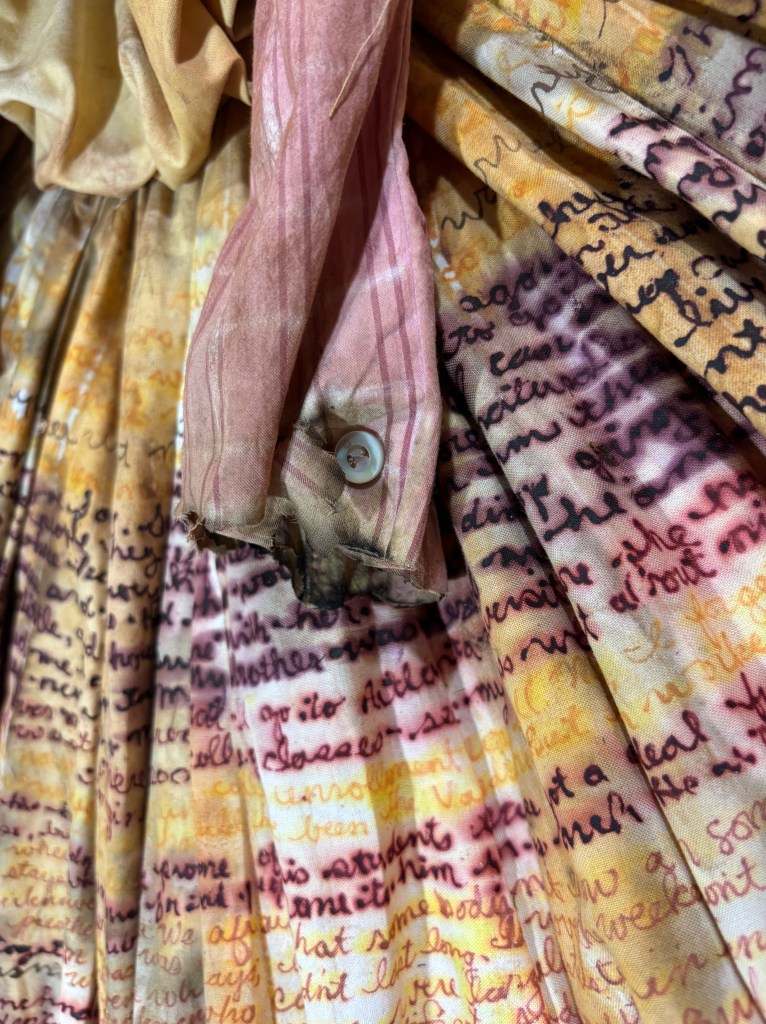
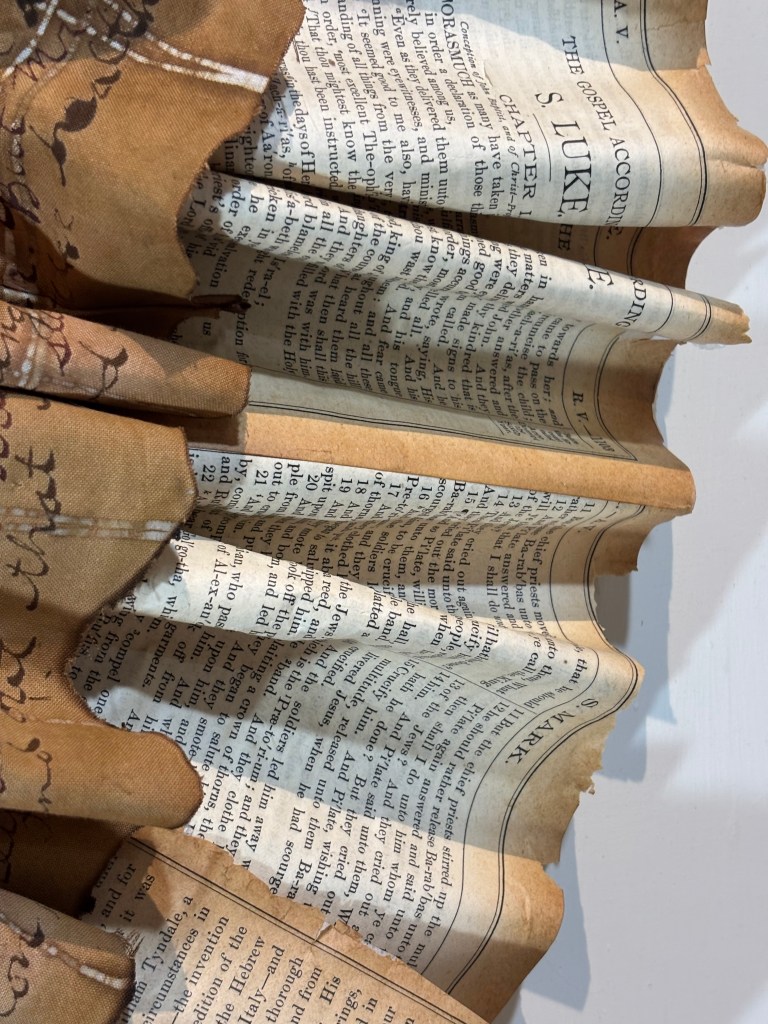
Bazoline’s dress is made from cotton fabric, an old bible, and a blouse. The edges of the fabric are singed with fire, suggesting a pheonix rising from adversity. The patterns and lines of the fabric are drawn with melted wax and chalk. A tiny bodice lies at the center of the dress, radiating the text of her words outward. The text consists of interviews and journals: words from Bazoline. Her words are marked, inked, and stained into the dress. Bazoline’s dress is supported and uplifted by the Bible, whose pages create the outermost layer of the dress. The entire work rests inside an oak frame, representing the structure and foundation Bazoline provided for those around her.
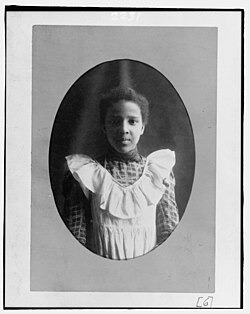
Photos taken by Thomas E. Askew for WEB DuBois c.190
 Sara Lynne Lindsay